
Skip

Exhibitor and products of the SPS 2026

The exhibitors of the SPS 2026 are expected to be published in spring 2026. Until then, you can find the exhibitors and products of the SPS 2025 here.

Exhibitor search 2025

di-soric GmbH & Co. KG

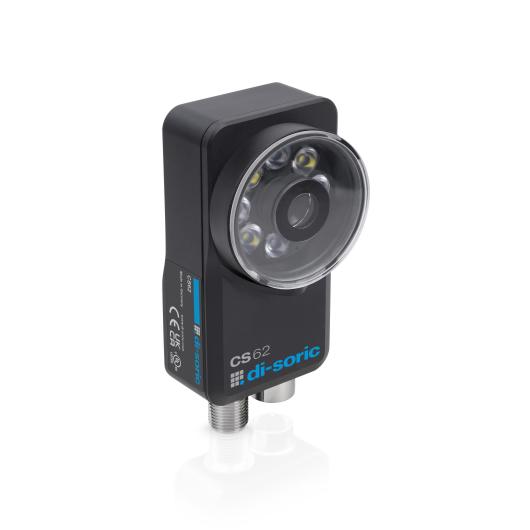
Vision Sensor CS-62

Trade fair innovation

Vision Sensor CS-62

di-soric GmbH & Co. KG

Description

On Equal Footing with Smart Cameras
New Vision Sensor CS-62 from di-soric Solves Complex Image Processing Tasks

The new Vision Sensor CS-62 and the latest software version nVision-i 25.1 form a powerful, flexible, and easily customizable image processing system. Featuring a logically structured user interface and intuitively configurable tools, even complex detection, inspection, and measurement tasks can be solved reliably in process. New: the integrated Smart Tool allows individual tools to be linked together almost at the push of a button. Users benefit from a cost-effective vision solution for complex applications that were previously the domain of smart cameras.

Equipped with optimized hardware, the CS-62 is three to four times faster than the smaller CS-60 model. The current software release nVision-i 25.1 from di-soric represents the tremendous versatility and flexibility of this innovative image processing solution: users gain more performance and options, and can easily create large jobs using the available tools. For example: smooth live images for better adjustments (focus, exposure time, camera alignment) and no waiting time when adding tools.

With a comprehensive, freely selectable set of image processing tools, tasks can now be handled that previously exceeded the standard capabilities of classic vision sensors. Thanks to the user-friendly interface, users can implement almost any requirement independently, without extensive training.

An Image Processing System for Broad Applications
The CS-6x series vision sensors from di-soric stand for efficient and reliable image processing solutions.

Standard tools like locating, detecting, and counting are used when parts need to be identified or checked for completeness. Tasks become more complex when distances, angles, or diameters must be captured and further processed. Tools such as image correction and calibration ensure high image quality and reliable object measurements in millimeters. If needed, additional ID tools like 1D/2D code reading or OCR functions can be added. Essentially, one sensor type is sufficient—kept up to date and expanded as needed via software upgrades. You only pay for what you actually use.

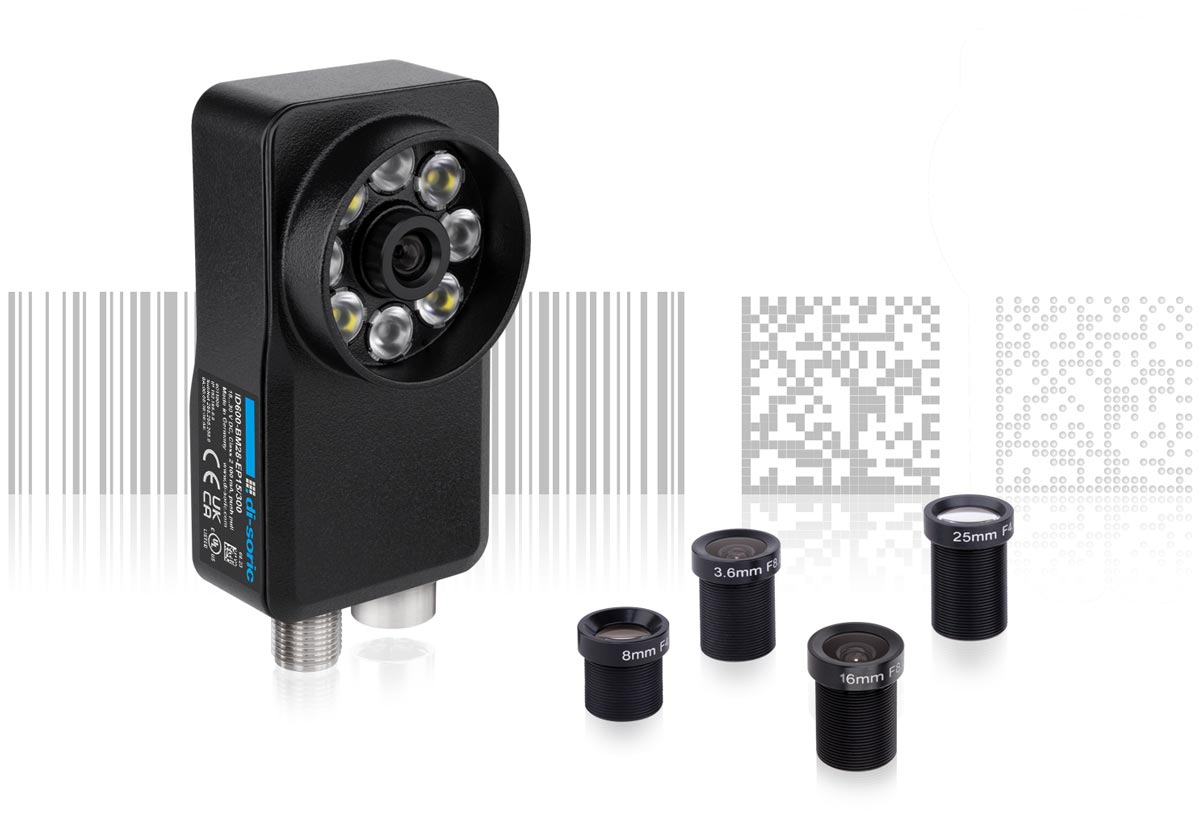
With four interchangeable S-mount M12 standard lenses (focal lengths of 3.6 mm, 8 mm, 16 mm, and 25 mm with adjustable focus), a wide range of tasks with varying requirements for distance, image section, resolution, and depth of field can be optimally solved.

Vision Sensor Goes Smart Camera
With the CS-62 Vision Sensor and the latest nVision-i 25.1 software release, the second generation of intelligent image processing solutions is now available. With the Smart license, users gain maximum flexibility and most of the functionality and performance of a smart camera—at the price of a vision sensor. Using the integrated Smart Tool, users can logically link individual tools, transfer results or calculated values between them, and combine them mathematically. This leads to more accurate evaluations. Even components with high variation can be detected quickly and reliably without changing jobs. Users can also freely design and customize visualizations and interfaces with this innovative vision solution.

The powerful software enables customers to inspect even complex components. We can now design tracking as needed: for example, linking a circle center coordinate—such as a borehole—with an angle measured by an edge tool, allowing for maximum flexibility and precision. A special feature: tools can be interconnected and, if necessary, calculated together to provide significantly more accurate results than a standard vision sensor.

Solving Complex Tasks with the Smart Tool
Using suitable tools, edges can be identified in the image, and intersections of lines can be calculated. These can be transferred directly to other tools and used as reference points. Similarly, an angle can be set as a parameter and passed to other tools. The Smart Tool offers the advantage of making decisions within the camera itself about the next step: if part A is detected, inspections proceed with specific tools; if part B is in view, the sensor switches to a different inspection process.

For label applications requiring dimensional accuracy and precise placement, especially with non-rectangular labels, the new CS-62 Vision Sensor offers far more reliable control than simply measuring distance from an edge or detecting a left/right boundary. The modern sensor can determine corner points, distances to arbitrary points, and intersections.

With the CS-62 Vision Sensor, users can identify quality changes in a process early on. For example, if the sensor monitors an adhesive dispenser, it uses reference images to detect when the contour or output amount deviates from tolerances and flags the result as defective/NOK.

At manual workstations, the CS-62 Vision Sensor offers creative support beyond simple OK/NOK evaluations. Thanks to the customizable visualization features of the new nVision-i 25.1 software, assembly personnel at manual workstations can be guided with visual cues for the next step in the process.

Meeting Individual Needs with Standard Products
The second generation of intelligent vision sensors from di-soric is no longer limited to basic applications like presence or position checks. They now offer much of the performance of smart cameras and can handle complex applications—at significantly lower costs and with the easy-to-use interface and configuration that di-soric vision sensors are known for. When complexity isn’t needed, it doesn’t appear in the job creation process.

Ultimately, the CS-6x vision sensor series from di-soric follows one guiding principle: We offer Individual Standards! This means we’re able to tailor our standard products to the specific needs of our customers—including customized hardware/software and user interface design to fit their corporate identity.
More products by di-soric GmbH & Co. KG

Trade fair innovation

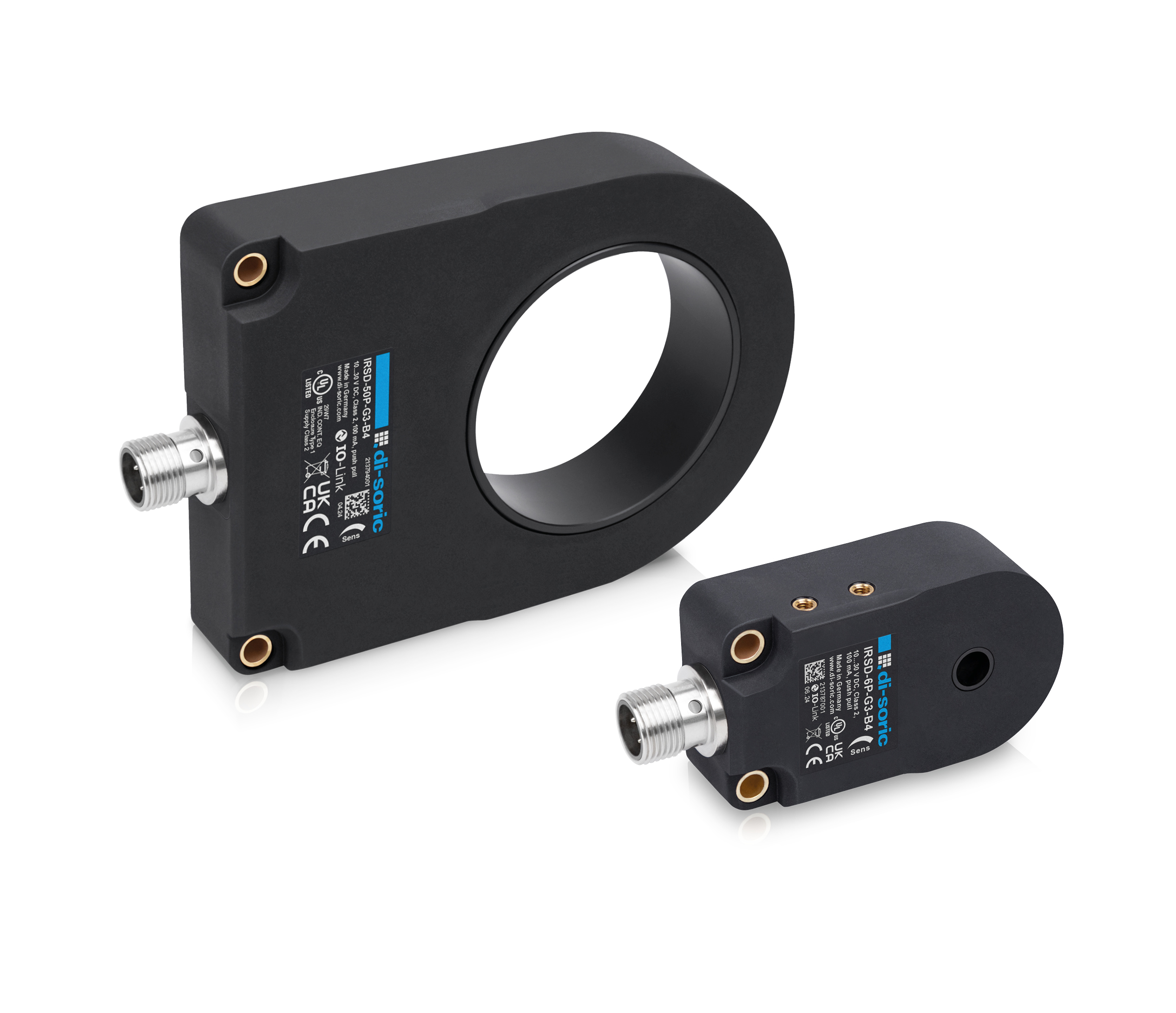
Inductive ring sensors IRSD

Precise detection with the highest resolution

di-soric: multifunctional ring sensors optimize assembly process

The new inductive ring sensors in the IRSD series by di-soric can detect the smallest metal parts precisely and reliably. IP67 protection type industrial ring sensors are primarily used with supply tubes in wide parts within the assembly and handling technology. The sensors, which are available in eight sizes, can fit in almost any application. Users either set the multifunctional ring sensors directly on the device, via a teaching line, or remotely via an IO-Link. Furthermore, the digital interface provides the user access to the complete spectrum of digitized parameterization and diagnosis in ongoing operation.

The occasional supply of very small objects of low mass via tubes is now common practice in automated manufacturing processes. In the context of downstream working and assembly steps, parts must be detected and counted. Using optimized coil winding, the inductive ring sensors in the IRSD series by di-soric achieve above-average resolution. In the case of parts that are fed quickly, the integrated pulse stretching generates an output signal that can be easily analyzed. The effective shielding makes the robust ring sensors immune to external influences. Even in dirty environments, users can count on reliable results.

Without mutual influence, the innovative ring sensors with their switchable working frequencies, can also be installed directly next to each other. With 16 variants, 8 sizes and detection ranges between 6 mm and 50 mm, there are enough options for almost any feed application, even under narrow installation conditions. Users will find the familiar, user-friendly di-soric setting and teaching concept in the IRSD series.

Furthermore, the digital interfaces offer users a variety of process-optimizing parameterization and diagnostic options. The multifunctional ring sensors can be precisely and easily adapted to customer-specific tasks: For example, they make it possible to choose between NO/NC, static and dynamic switching principle, differential mode (push-pull), pnp and npn in a targeted manner. The autoteach/Intelliteach function enables teach-in of falling and quickly passing objects. The diagnostic function Stability, which displays when object detection is impaired by soiling, for example, is also helpful. The new inductive ring sensors in the IRSD series by di-soric offer a reliable and practical solution for almost any application case.

Trade fair innovation

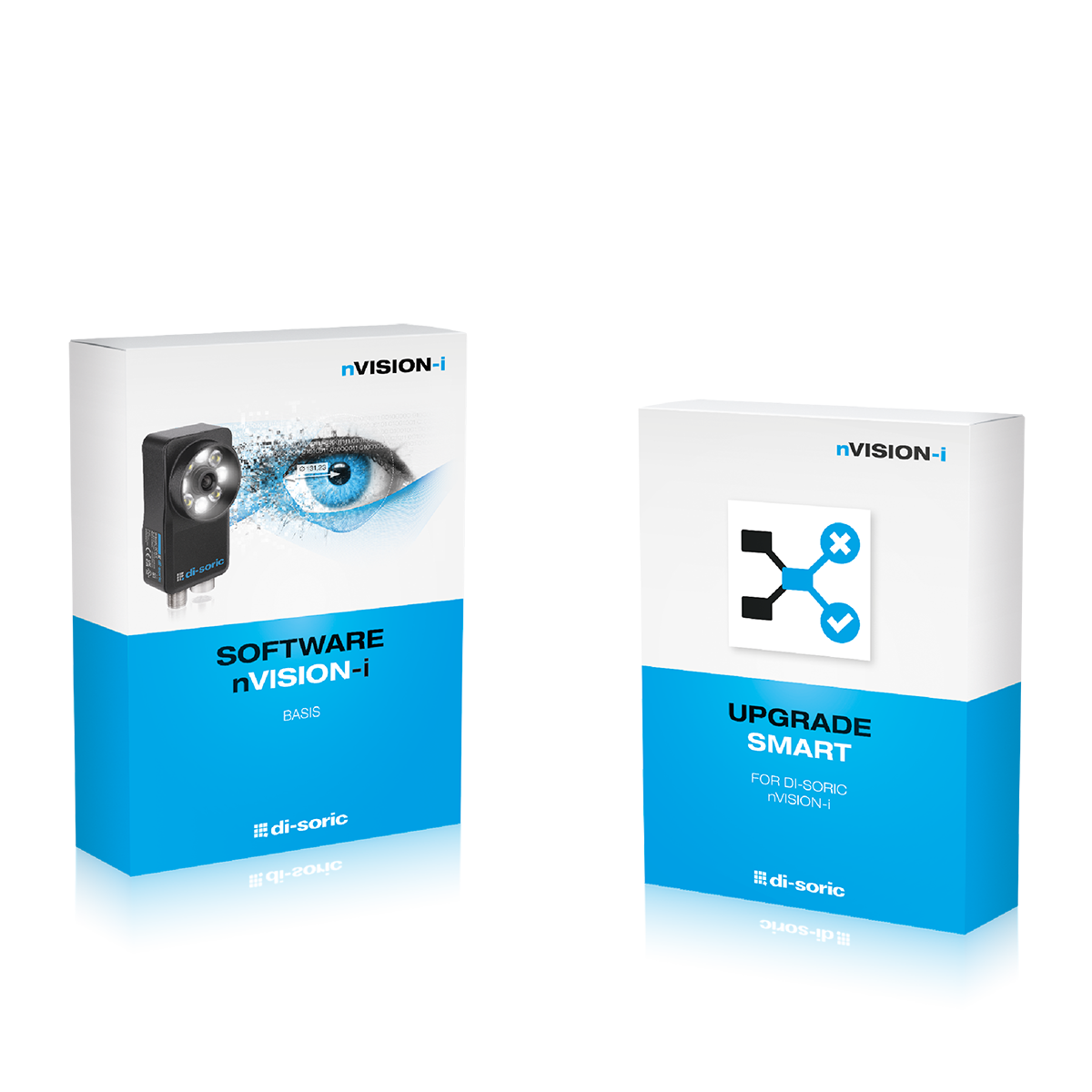
Machine Vision Software nVision-i, Version 25.1

The Core Component of Our Machine Vision Systems

With nVISION-i, you configure and program vision sensors and ID readers directly on your PC – all the way up to creating jobs that are then loaded onto the ready-to-use devices. It includes an emulator that allows simulation of the CS-60 / CS-62 vision sensors and the ID-600 ID reader.

nVISION-i: You only pay for the tools you need.

Start with the most affordable base model of an ID reader or vision sensor and use the included standard tools for basic applications. As your application requirements grow, you always have the option to add more tools.

nVISION-i Upgrades allow you to cost-effectively upgrade your existing hardware with simple software extensions – reducing the need to replace devices.

Upgrade Licenses:

For the base version of the ID readers, the following upgrades are available: ID Pro, OCR, and Smart. For the base version of the vision sensors, all upgrades are available.

  • Measurement
  • ID
  • ID Pro
  • OCR
  • Smart
  • Custom

nVISION-i: Intuitive to use, with high-performance tools

Not only does it feature a clean, intuitive, and easy-to-use interface, but it also provides high-performance tools that are consistently optimized for maximum performance and top-tier quality. The pipeline visualization and the linking of individual tasks in the Logic Tool provide maximum flexibility and speed in application development.

nVISION-i: The Logic Tool

Freely linking the results of multiple tools into a comprehensive output delivers high performance – without loading the PLC – because processing is done directly in the vision sensor. Another major advantage: high flexibility. Measured values or results can be addressed to any desired location on the fieldbus.

Flexible Linking with Clear Visualization

The graphic-oriented Logic Tool is based on a function plan (FBD – Function Block Diagram), enabling a clear overview even of complex functions. This makes it easy to implement and understand input and output behavior – reducing training time, since the approach is familiar from daily PLC programming tasks.

Optimally Positioned Values for the PLC

In many other software solutions, results are often written to a fixed address where they can be retrieved by the PLC. nVISION-i offers greater flexibility – it can send values to the most efficient location for the PLC, simplifying programming and increasing efficiency.

nVISION-i: The Smart Tool

Easily link tools, results, and functions with flexible visualization to solve complex applications.

The Smart Tool enables a wide range of tasks:

  • Activate individual tools
  • Transfer status to the next image capture
  • Create and customize visualizations
  • Calculate and structure partial results
  • Calculate intersections
  • Configure arbitrary tracking
  • Define linking values
  • Create reference geometries

Examples:

  • Visualize code readability and quality
  • Display quality defects
  • Circle probing and visualization at smart camera level
  • Geometric functions for precise tracking or measurement
  • Completeness checks at smart camera level
  • Processing of result lists
Trade fair innovation

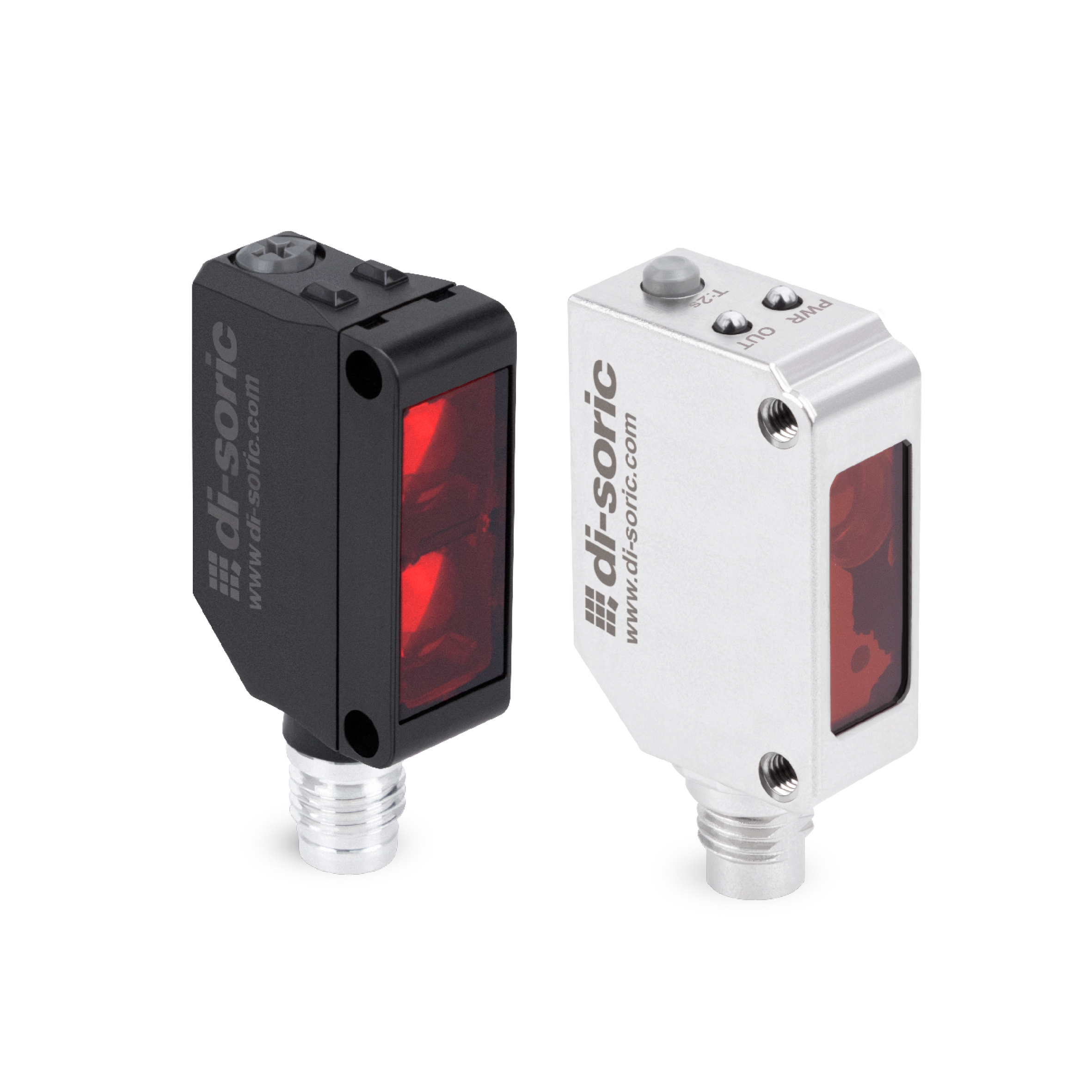
FRAME LIGHT BARRIERS OGWSD WITH IO-LINK

Several benefits combined
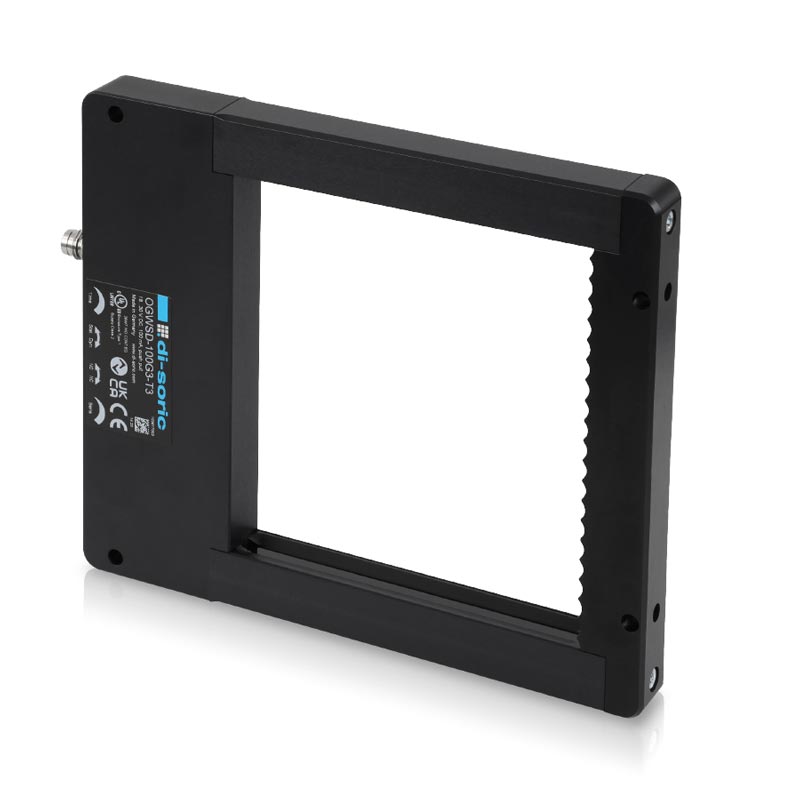
Frame light barriers from di-soric can be installed quickly and are immediately operational due to perfect alignment and the calibration of transmitter and receiver. They also detect very quickly moving objects independent of position in the entire detection range and are ideally suited for counting processes and for range detection.

No application gets left out
Due to the variety of sizes and formats, the high resolution and ultra-fast reaction time, our frame light barriers make optimal, process-reliable solutions possible - always tailored to the application and the installation space available.

Universal use possible
Both series convince with high flexibility in many application fields by static and dynamic object detection, sensor modes and IO-Link.

Sustainably durable
di-soric frame light barriers are also characterized by exceptionally stable metal housing and connectors and high protection class IP67.

FRAME LIGHT BARRIERS
OGWSD WITH IO-LINK

The robust, fast series with an activation time of 0.05 ms for conveyor technology – can be immediately installed and operational

The robust OGSWD in the frame design are range sensors that recognize objects independent of object position in the detection range. They are eminently suited for the detection of very small parts. The multifunctionality of the OGWSD series is expanded with the additional sensor modes for detection of submersing objects and for differentiation and verification of larger objects.

Frame format with removable crossbar for more flexibility in the applications

No blind zone: The mechanical recess matches the detection range

Impact protection: Extremely resistant, resilient protection of optics from damage

Position-independent object detection: Easy handling and commissioning

Dual operating concept: Via 4 potentiometers and IO-Link

Operating elements

  • Sensitivity
  • Static / dynamic
  • NO / NC
  • Switch-off delay

Activation time 0.05 ms - independent of size: Ideal for the recognition of very quickly falling objects in highly dynamic processes

Recognition of objects from Ø 0,7 mm (depending on size): Small, falling objects can be recognized process-reliably in the entire detection range of the OGWSD with the "dynamic" sensor mode, even in case of soiling

IO-Link - Ready for digitization: Sensor identification, configuration and diagnosis, remote maintenance option, quick exchange of sensor due to parameter storage in IO-Link master

4 sensor modes: new application fields for frame light barriers: In addition to the recognition of falling objects, the OGWSD is suited for feature, presence and position checks within the detection range

Connection: Connector M8, 3-pin, compatible with market standard and predecessor products

Push-pull output: pnp or npn function in one device