
Skip
Register now and benefit from the early-bird price

Secure your stand at the SPS 2026 at a discounted rate by 31 March 2026. Would you like personal advice? Our team for new customers will be happy to support you with your planning.

Exhibitor & products of the SPS 2026

The exhibitors of the SPS 2026 are expected to be published in spring 2026. Until then, you can find the exhibitors and products of the SPS 2025 here.

Exhibitor search 2025
MathWorks

Simscape Multibody

Description

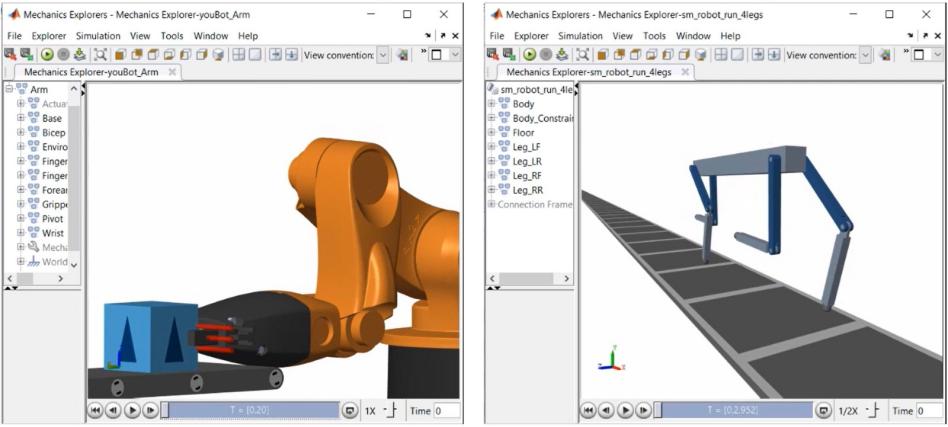
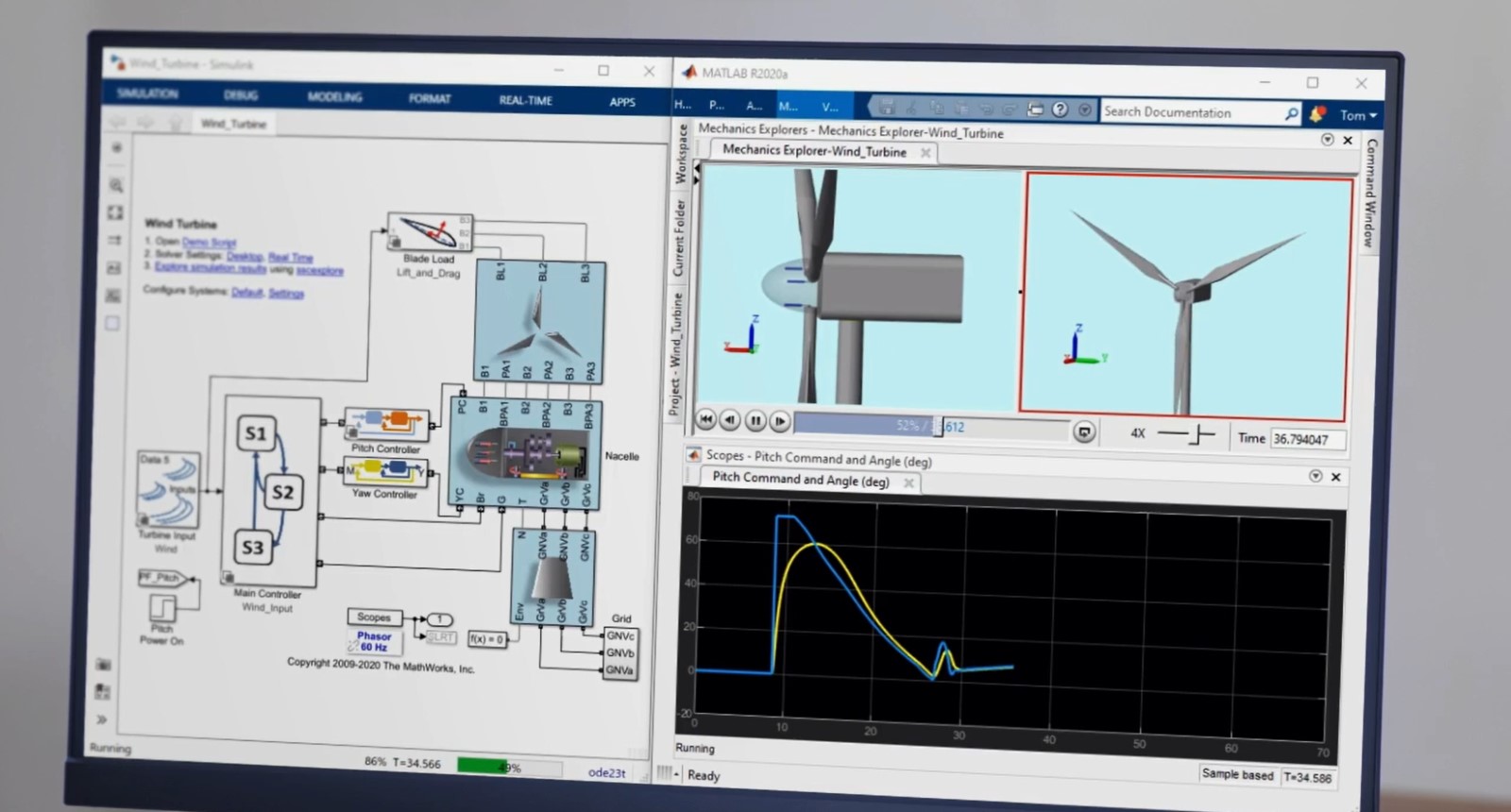
Simscape™ Multibody™ provides a multibody simulation environment for 3D mechanical systems, such as robots, vehicle suspensions, construction equipment, and aircraft landing gear. You can model multibody systems using blocks representing bodies, joints, constraints, force elements, and sensors. Simscape Multibody formulates and solves the equations of motion for the complete mechanical system. You can import complete CAD assemblies, including all masses, inertias, joints, constraints, and 3D geometry, into your model. An automatically generated 3D animation lets you visualize the system dynamics.

Simscape Multibody helps you develop control systems and test system-level performance. You can parameterize your models using MATLAB variables and expressions, and design control systems for your multibody system in Simulink. You can integrate hydraulic, electrical, pneumatic, and other physical systems into your model using components from the Simscape family of products. To deploy your models to other simulation environments, including hardware-in-the-loop (HIL) systems, Simscape Multibody supports C-code generation and FMI export.
More products by MathWorks

Simulink

Simulink® is a block diagram environment used to design systems with multidomain models, simulate before moving to hardware, and deploy without writing code.

Simulink is used for control systems design, electrification, robotics and autonomous systems, digital twins, and artificial intelligence.

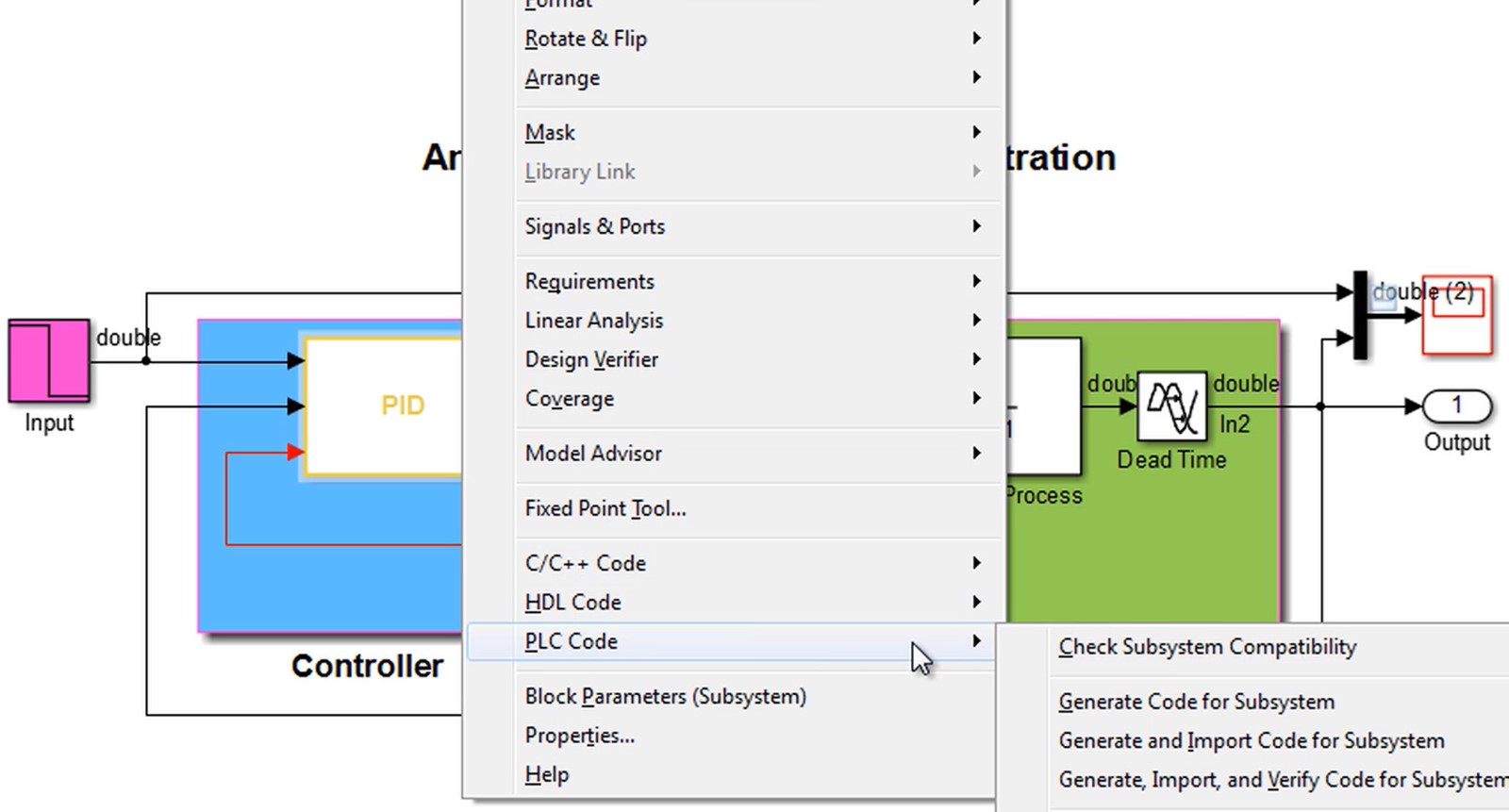
In Industrial Automation and Machinery, Simulink is used for creating virtual models to simulate and test systems early and often, to validate designs through Hardware-in-the-Loop and rapid prototyping, and to generate production-quality C, C++, IEC 61131, Verilog and VHDL code.

Some highlights of using Simulink include:

  • Model-Based Design: To transform development of complex systems, market-leading companies adopt Model-Based Design by systematically using models throughout the entire process.
  • Simulation: Explore a wide design space and test your systems early with multidomain modeling and simulation.
  • Model-Based Systems Engineering: Model-based systems engineering (MBSE) is the application of models to support the full system lifecycle. Simulink bridges development from requirements and system architecture to detailed component design, implementation, and testing.
  • Agile Software Development: Agile software development helps teams deliver value to their customers faster using short iteration cycles with an emphasis on continuous integration and team collaboration. Simulation, automated testing, and code generation shorten the development cycle, enabling you to become a successful Agile team.